Financial Institutions
A customer searching for the nearest cash machine has an urgent, immediate need, whereas a customer searching for a local branch often seeks a high-consideration consultation, such as opening a commercial account or securing a mortgage. For a bank or credit union operating hundreds of physical branches and thousands of standalone cash machines, failing to distinguish between these two search intentions sends high-intent depositors straight to competing financial institutions.
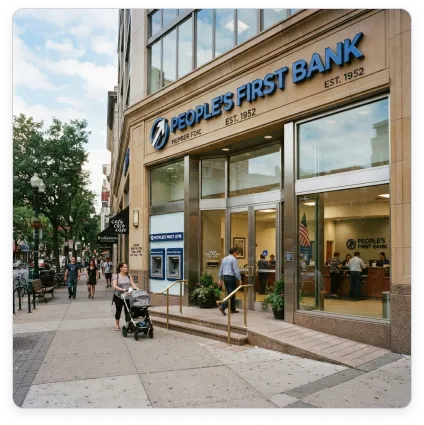
Why Branches and ATMs Need Separate Listing Strategies
Branches and ATMs are not interchangeable assets. They have different locations, availability patterns, operating models, and customer purposes, making a single entity strategy difficult to maintain accurately. Executing effective local SEO for banks requires managing physical branches and standalone machines as distinct, coexisting digital entities. Without dedicated atm listing management, financial institutions risk confusing search algorithms, diluting map pack rankings, and frustrating customers searching for immediate financial access.
Divergent Consumer Search Intent
A user searching for a “bank near me” typically requires in-person teller services, loan consultations, or safe deposit box access, whereas an “ATM near me” query demands instant cash withdrawal or quick deposit capabilities.
Independent Operating Hours
Branch lobbies and drive-thrus operate on specific banking schedules, while attached vestibule or drive-up ATMs frequently offer 24/7 access that must be displayed separately to avoid misleading users.
Dedicated Category Disambiguation
Major map platforms, including Google Maps and Apple Maps, maintain distinct primary categories for “Bank” versus “ATM,” requiring distinct profiles so both rank for their respective keyword queries.
Standalone vs. On-Site Deployments
Standalone ATMs located in transit hubs, retail centers, or drive-up kiosks lack a physical branch anchor and require independent geographic coordinates, naming structures, and profile management.
Algorithm-Driven Merging Prevention
Without explicit entity structuring, search engines often attempt to merge adjacent branch and ATM listings into a single profile, stripping away distinct hours, phone numbers, and ranking opportunities.
To understand the structural necessity of managing cash machines independently, read our complete guide on Why Banks Need Separate ATM Listings.
Keeping Branch Listings Accurate at Scale
Inaccurate listing data creates severe consumer friction, especially when customers arrive expecting specific institutional services that a particular branch does not provide. That’s why successful bank branch locator SEO and centralized financial services listing management require keeping specialized services, lobby schedules, and drive-thru hours synchronized across the entire network.
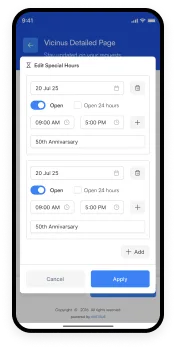
Strict Banking Holiday Schedules:
Pre-schedule federal, state, and regional bank holiday closures across all search ecosystems simultaneously to prevent customers from visiting closed branches.
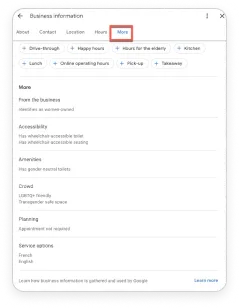
Branch-Specific Service Attributes
Clearly define location-specific capabilities, such as commercial lending desks, mortgage advisors, wealth management representatives, medallion signature guarantees, and safe deposit boxes
Lobby vs. Drive-Thru Schedule Alignment
Configure independent operational hours for teller counters, advisory desks, and external drive-thru lanes without creating conflicting profile signals.
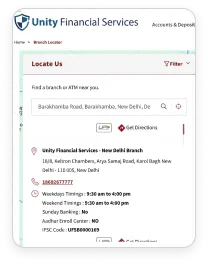
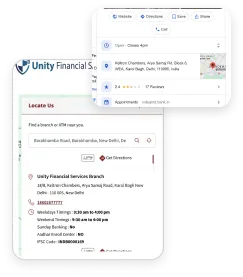
Locator-to-Map Data Consistency
Managing Reviews in a Regulated Industry
Zero Financial Data Disclosure
Never disclose, discuss, or confirm account balances, specific transaction histories, fee assessments, overdraft disputes, or loan application statuses in public review threads.
The Non-Confirmation Principle
Avoid confirming or implying that a reviewer is an existing customer or account holder, even when the individual references their personal banking details publicly.
Standardized Offline Escalation
Respond with neutral, professional language that acknowledges institutional standards of service and routes the reviewer to a secure customer care line, branch manager, or verified support portal.
Pre-Approved Compliance Governance
Enforce the use of centrally vetted, compliance-approved response templates to prevent branch staff from posting unapproved or legally sensitive remarks.
Proactive Feedback Acquisition
Deploy automated, compliant review generation workflows across your network to maintain strong ratings and protect local visibility
Managing Branches and ATMs Across a Large Network
Financial networks frequently oversee some of the largest location footprints in enterprise search. Scaling credit union local SEO and multi-branch financial services marketing across hundreds of physical branches and thousands of partnered or standalone ATMs introduces massive operational friction. Without a centralized governance framework, uncoordinated updates lead to pervasive listing drift, stale holiday hours, and diluted regional authority.

Compounded Network Footprints
Managing local discovery across full-service branches, shared credit union branches, drive-thru kiosks, and off-site cash machines multiplies data points exponentially across every market.

Automated Data Drift Protection
Continuously detect and overwrite unauthorized third-party pin edits, incorrect holiday schedules, or duplicate listings generated by automated directory scrapers.

Localized Campaign Syndication
Deploy localized promotional campaigns across specific branch clusters without manual per-profile posting.

Portfolio-Wide Visibility Diagnostics
Benchmark map-pack rankings, search impressions, customer direction requests, and review ratings across regional districts to identify underperforming branches.
How Vicinus Supports Banks and Financial Service Providers
Managing thousands of financial listings, split ATM profiles, and compliance-sensitive customer reviews across fragmented publisher networks drains marketing resources. Vicinus provides an automated local search and reputation management platform built to help financial institutions maintain verified data accuracy, enforce regulatory guardrails, and drive local customer engagement.
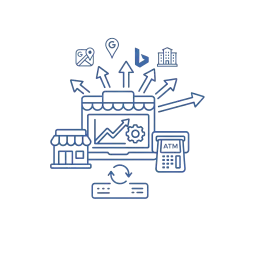
Dual Branch & ATM Profile Architecture
Centralize and bulk-update physical branch locations alongside nested or standalone ATM listings across Google, Apple Maps, Bing, and financial directories from a single master dashboard.
Compliance-Safe Review Command
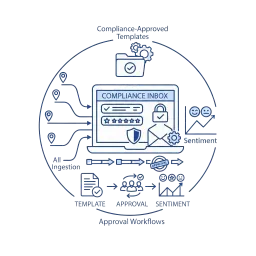
Ingest customer reviews across all branches into a unified inbox equipped with compliance-approved response templates, approval workflows, and sentiment tracking.
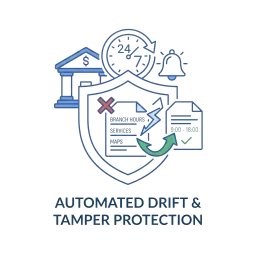
Automated Drift & Tamper Protection
Monitor financial listings around the clock to detect and automatically revert unauthorized third-party edits to branch hours, services, or map coordinates.
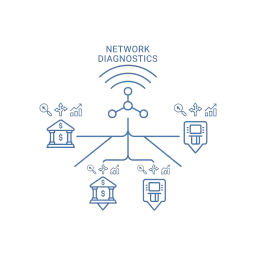
Network-Wide Performance Diagnostics
Track search impressions, direction requests, and localized keyword rankings across individual branches and standalone ATMs to optimize local capture rates.
Protect in-store foot traffic and guide high-intent shoppers straight to your nearest retail locations with an all-in-one local search platform.
Frequently asked questions
Yes. ATMs target high-urgency, immediate-intent searches that differ from branch visits, and they frequently maintain 24/7 operating schedules. Establishing dedicated ATM listings with the appropriate primary category ensures visibility for cash and deposit queries while preventing search engines from suppressing location data.
Deploy a centralized local listing management platform to syndicate verified operating schedules across Google, Apple Maps, Bing, and directory aggregators from a single source of truth. This allows marketing and operations teams to pre-schedule banking holiday closures and manage split lobby and drive-thru hours portfolio-wide.
Respond using neutral, compliance-vetted language that does not confirm the reviewer’s identity as a customer or discuss account specifics, fees, or transactions. Direct the reviewer to a secure offline support channel, such as an official customer care telephone line or a branch manager’s secure email, to resolve their dispute safely.
Yes. Vicinus provides the multi-location infrastructure needed to manage full-service branches, drive-thru lanes, and off-site standalone ATMs simultaneously. The platform enables bulk data syndication, automated drift protection, and compliance-safe review workflows across your entire geographic footprint.




