Google Business Profile Updates Affecting Local Discovery
Date : November 3, 2026
Share
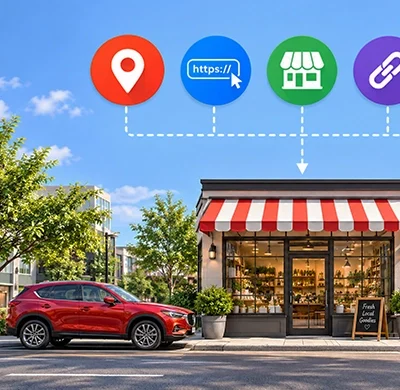
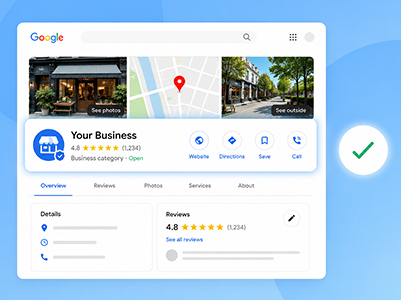
Google continues to refine how local businesses are discovered across Search and Maps, making Google Business Profile more influential than ever. As AI-powered search experiences, smarter algorithms, and intent-based results become increasingly common, businesses must stay informed about the latest Google Business Profile updates that impact local visibility.
Many of these changes go beyond traditional ranking factors such as keywords and proximity. Google is placing greater emphasis on profile accuracy, relevance, trustworthiness, real-time business information, and overall user experience. With AI playing a larger role in local discovery through personalized recommendations, voice searches, and predictive results, keeping up with major Google Business Profile updates is essential for businesses looking to maintain visibility and remain competitive in local search.
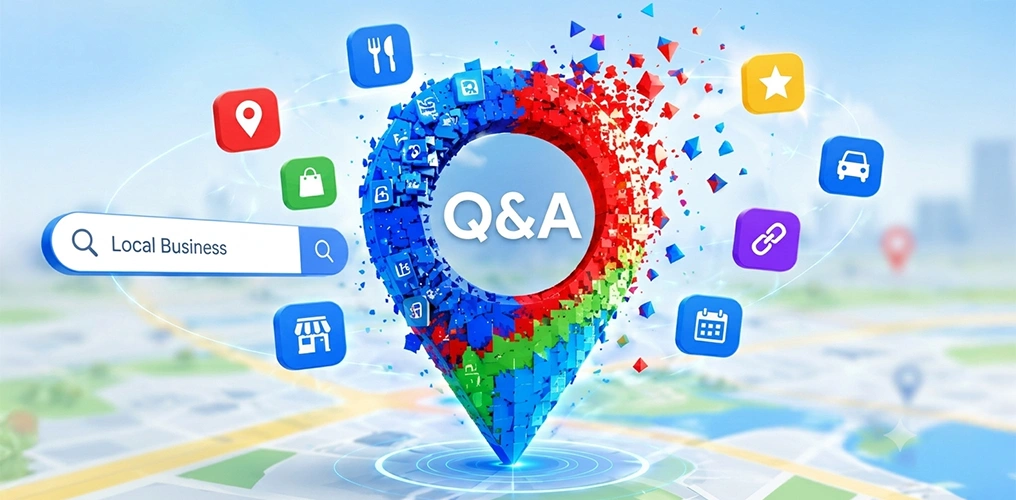
GBP Q&A Going Away
There’s been a major change to the way the Q&A feature works on Google Business Profile, and in many cases it seems to be quietly disappearing. Some users and marketers say the feature no longer appears or works on some listings, prompting worries as to whether Google is scrapping it altogether.
The Q&A feature was created in 2017 to let prospective customers ask questions directly on a business listing. Industry analysts say this might be part of a broader movement toward AI-led experiences where AI-powered local search and automated responses could replace older, less effective features. Google appears to be moving away from depending on inconsistent user-generated inputs toward more controlled and reliable ways of presenting information.
Spam And Review Bombing Tag
A brief discussion has emerged over Review management strategies for Google Business Profile marked with a “Spam & review bombing, reported to Google” label, which indicates that Google had implemented a visible marker during its inspections. Nonetheless, this proved to be a false alarm, the label was, in fact, personally applied by a business owner in response to evaluations, rather than being an official Google feature. It underscores the rapid dissemination of disinformation within the SEO domain and the necessity of validating local search algorithm updates prior to taking action.
Artificial Intelligence Transition
A more significant insight arises from the rapid evolution of AI capabilities. Initially, tools such as ChatGPT, Claude, and perplexity encountered difficulties accessing and interpreting review data from Google listings; nevertheless, within weeks time, they began incorporating elements such as star based ratings into their assessment filters. This rapid shift reflects a larger reality: AI in local search is evolving rapidly, making it harder for businesses to implement proven local SEO strategies. This transition forces all business and marketing consultants to re-strategize to stay ahead in the competition.
Review Snippet Guidelines Update
Google has clarified its review snippet standards, underscoring that each review or rating must pertain to a distinct, identifiable entity. Websites that use structured data (such as review schema) should refrain from conflating multiple items, services, or enterprises into a single review. This change seeks to enhance clarity and trust in AI-driven search results on Google, necessitating brands to evaluate their schema markup and adhere to best practices.
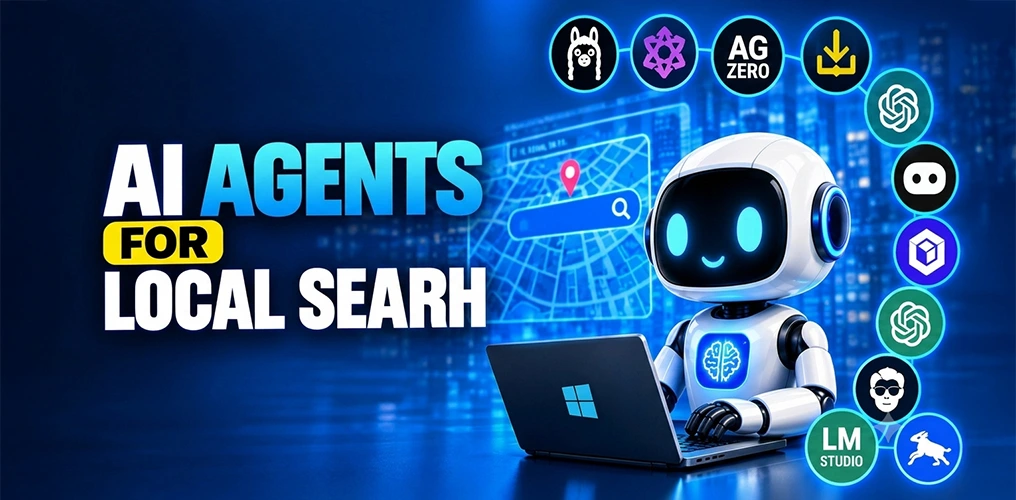
Ai Agents Are Entering Local Search
Local search AI is quickly evolving beyond mere discovery to direct implementation with the introduction of AI agents in local search. Google is exploring tools that let AI contact businesses on behalf of a user to check data such as product availability, merging automation into real-world interactions. That means it’s moving beyond simply showing information to helping users actually do their jobs.
At the same time, automated booking experiences are emerging in Google’s AI-powered interfaces, letting consumers purchase a reservation without leaving the search experience. That means a new paradigm for businesses is approaching: optimizing for search engines, users, and AI bots that study and respond to information.
Enhanced Exposure For Google Posts
There is some good news for businesses and organizations with multiple locations employing Multi-location SEO strategies on their Google Business Profile for online visibility. The Posts area, once exclusive to showcasing events, is now being updated by Google to encompass commercial offerings. This is heavily included by multi-location companies appearing adjacent to the business name in mobile searches.
This change is another sign of continued investment in Posts, but companies should be careful not to over-rely on any one feature and remain flexible as improvements go out.
“Know Before You Go” Gets A Refresh
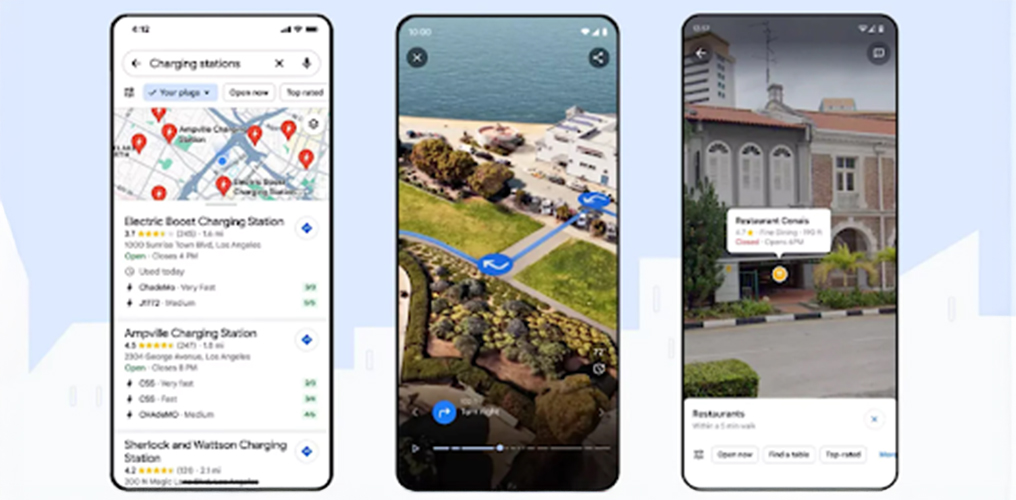
The “Know Before You Go” feature on Google Maps, powered by artificial intelligence, has undergone a noticeable user interface redesign and is now being elevated to a more prominent position at the top of mobile listings. However, this function might not be a massive upgrade in itself, but Google is nevertheless increasing its focus on it, particularly by extracting crucial insights directly from user evaluations to provide searchers with information that is instantly accessible and ready to use.
Ai-Powered Google Maps Results
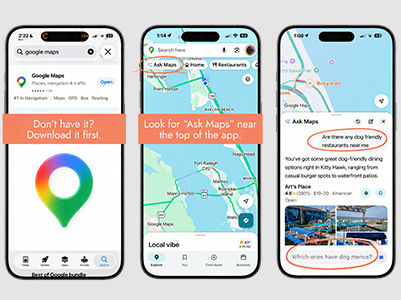
AI-enhanced Google Maps results are transforming search result rankings. AI-generated search results on Google Maps are increasingly influencing local exposure, particularly on mobile devices. A recent research indicates that AI Map packs are becoming more prevalent in a significant proportion of searches, with many of the businesses displayed differing from those in conventional search results. Google appears more likely to surface these AI-generated results for high-intent queries that include phrases such as “best,” “top,” or “affordable.”
Traditional ranking and local seo methods are no longer as reliable as they used to be. The current period requires businesses and organizations to evaluate AI’s effects in their domains and make changes accordingly to appear in Google Maps AI results.
Conclusion
Local SEO is constantly changing due to AI, platform capabilities, and user expectations. Google is improving business listings on Google Maps and Google Business Profile with real-time accuracy, reviews, and AI-driven intent interpretations. Results on any particular day may fluctuate, they may not recur, possess importance, or appear identical the following day. Similarly, the outcomes of the previous day could not be repeated the following day.
The secret to being competitive in the field of local SEO is adaptability and the ability to change with time. The world is constantly changing, and those who are attentive and flexible will be best placed to get attention and enable local discovery.