The Rise of AI-Powered Q&A in Google Maps

Date : July 2, 2026

Google Maps is rethinking how questions get answered. Google Maps quietly turned the page on its well-known question and answer section on November 3, 2025, by releasing Ask Maps, a feature powered by artificial intelligence that is aimed to provide answers to inquiries in a manner that is both more intelligent and contextual.

Although the function is only available in the United States at the moment, it is anticipated that it will eventually be made available in other countries; however, Google has not yet confirmed any timetables for its expansion. Here’s a more in-depth examination of what this shift means and why it is significant is local seo.

Introducing Ask Maps: How AI Is Changing Google Maps Search

Ask Maps is the latest AI-enhanced feature of Google Maps, designed to respond to user inquiries in real time with much improved accuracy. Rather than depending on fixed keywords, it comprehends intent, context, timing, and location to provide responses that are personalized, pertinent, and contextually appropriate.Instead of merely listing nearby locations, Google Ask Maps comprehends user intent and reacts appropriately.

Where to find Ask Maps on Google Maps

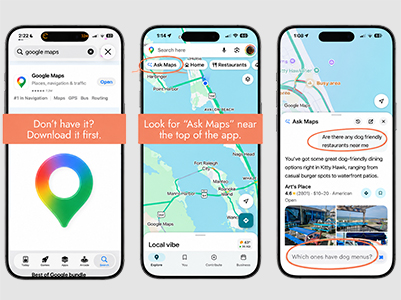
Ask Maps is included into two important parts of Google Maps:

1. Ask Maps in the Google Maps search bar: discovering places by intent

By allowing users to directly insert genuine, conversational inquiries into the Google Maps search bar, Ask Maps is able to determine intent rather than relying solely on keywords.

A person searching for “A quiet café to work from nearby” will find a carefully tailored selection of options on the map. Ask Maps takes into account factors such as location, time of day, amenities, and recent modifications to present the most pertinent selections.

In selecting businesses for emphasis, Ask Maps’ AI prioritizes comprehensive and actively managed Google Business Profiles. Visual indicators, such as images depicting laptop-compatible seats or announcements regarding complimentary Wi-Fi, might affect a business’s visibility in search results.

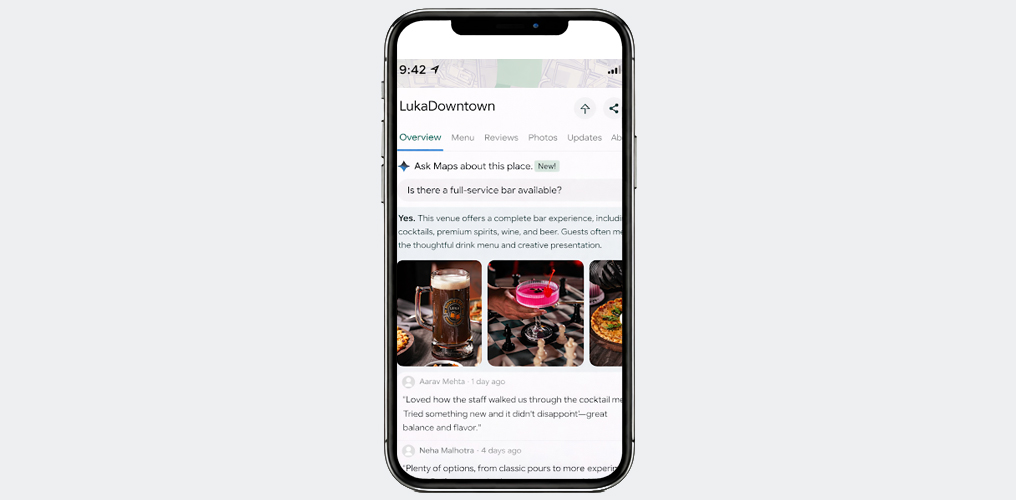
2. Inquire via Maps on a Google Business Profile: obtaining precise responses

Ask Maps is directly connected into individual Google Business Profiles, which enables users to interact with the artificial intelligence to obtain information that is accurate and particular to their businesses.

For instance, someone looking at a restaurant listing may inquire, “Do you offer vegan options?” and inquire with queries such as “Is there outdoor seating?”, “Do you accept reservations?”, or “Are you open late on weekends?”

The conversational structure enables users to swiftly elucidate details without navigating through various areas of the listing or departing from Google Maps.

How Does Ask Maps Work?

1. Ask Maps in the Google Maps search bar: discovering places by intent

Ask Maps enables users to submit open-ended questions directly in the query field, with suggested prompts tailored to each business and the flexibility to ask custom queries. For multi-location brands, suggested questions can vary widely by location, with little overlap. Even similarly worded questions may return slightly different answers.

In addition, the query box is able to accommodate detailed, multi-part inquiries. It is possible for users to see results that indicate there is not enough information to deliver an answer when their searches become excessively comprehensive or when there is a restricted amount of data.

Ask Maps’ AI relies on three primary data sources to provide precise and dependable responses:

  1. The Google Business Profile Listing Of The Enterprise (Listings): The AI examines services, categories, qualities, operating hours, images, and additional listing information. This continues to be the key data source.
  2. Customer Evaluations (Reviews): Ask Maps evaluates both favorable and unfavorable reviews to enhance the context and depth of its responses.
  3. Company Website And Trusted Online Directories (Landing Pages): The company’s website and reputable external sources, including local directories, comparison platforms, and authoritative media outlets: The AI verifies information to maintain uniformity throughout the internet.

Ask Maps influences discovery on Google Maps. That is why optimization, precision, and consistent updates across these three pillars have become increasingly vital for prominence.

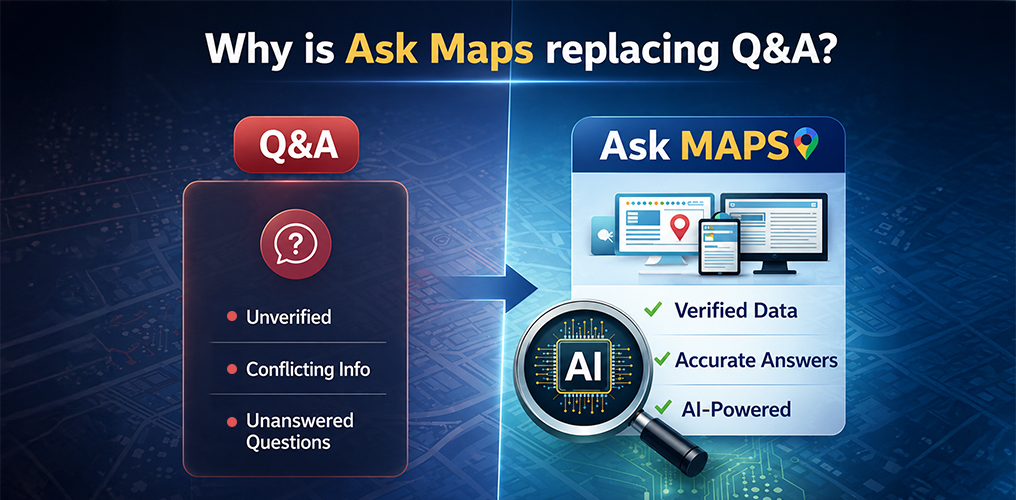
Why is Ask Maps replacing Q&A?

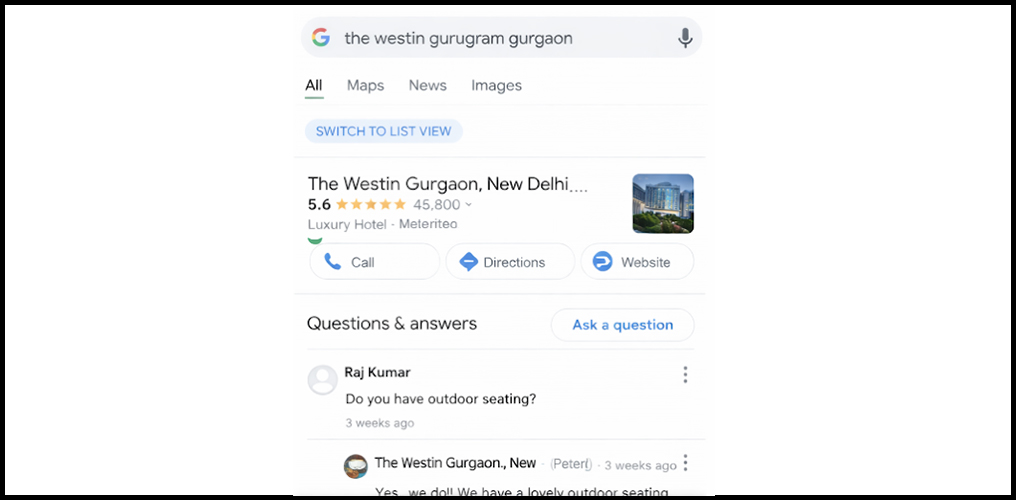
The Q&A feature on Google Business Profiles, which came out in 2018, lets consumers ask questions immediately while looking at a business listing.Business owners could react, but answers didn’t have to come from verified sources; anyone could answer, often resulting in information that was wrong, contradictory,  out of date or unaddressed.

Ask Maps relies on AI to analyze trusted data sources, delivering consistent, accurate, and up-to-date answers, without depending on crowdsourced responses.

Ask Maps and Google’s Growing AI Ecosystem

Ask Maps, in addition to other features like AI Overviews and AI Mode, further demonstrates how artificial intelligence has become an integral part of Google’s ever-evolving technology. This transition does not need the implementation of whole new strategies for firms; rather, it highlights the significance of adhering to tried and tested best practices on a constant basis, including the following:

  1. Data standardization for businesses across the internet (Listing management).
  2. The process of actively collecting and handling feedback from customers (Review Management).
  3. Utilizing technologies such as a Store Locator to ensure that Google listings and websites are always up to date and contain all of the necessary information (Store Page Management).

Managing company data on a large scale is becoming more and more important as AI decides what users see and trust. This is especially true for organizations with different locations. This is where platforms like Vicinus come in handy. They help businesses keep their listings updated and consistent, answer reviews promptly and create and optimize store pages.

Final Thoughts

Ask on Google Maps is a big change in how Google Maps gives you information. Instead of getting answers from people, it now uses AI to give you answers based on verified facts. For businesses, being listed on Google Maps is no longer enough; they also need to keep their information correct, consistent, and well-optimized across all of their digital touchpoints.

Companies who approach their online presence as a living asset, actively managing it, reviewing it often, and making sure it is accurate, will be the ones that stay visible in an AI-first search environment.