NAP Citations

A single wrong phone number or outdated address repeated across web directories can quietly erode local search rankings and customer trust. For multi-location brands, this operational risk multiplies exponentially across every storefront and publisher platform. Ensuring accurate, identical business details everywhere is foundational to local visibility and consumer confidence. 

Learn more in our detailed guide on  What Are Citations in SEO?

What is a Citation?

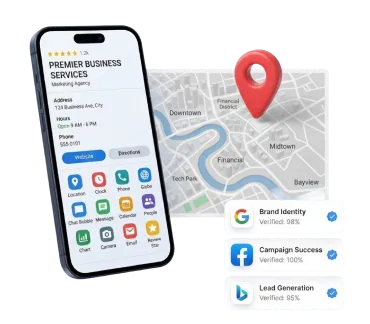
A citation is any online mention of name, address, and phone number (NAP), regardless of whether it includes a backlink to your website. These are the foundational identifiers of your business that are available to the public.
Structured

Standardized business directory listings, map platforms, and review portals where core contact details are submitted into dedicated, formatted profile fields. 

Unstructured

Contextual mentions of a business's contact details appearing in editorial articles, news coverage, blog posts, or social media content without fixed directory formatting. 

To learn how search algorithms process business location details, read our complete guide on what citations are in SEO.
Discover how to clean up your NAP data.

High-Impact NAP Discrepancies and Their Algorithmic Cost

Citation signals carry 7% of Local Pack ranking weight. However, NAP inconsistency errors create damage far beyond their percentage, especially because they trigger entity fragmentation and reduce Google’s trust in the business data across all surfaces.

Yet, not all citation errors impact search engines equally. Minor formatting differences (such as “St.” versus “Street”) are typically normalized by search algorithms, but functional discrepancies, like mismatched suite numbers, stale tracking phone numbers, or conflicting business names, directly fracture entity trust and suppress local rankings.

Discrepancy Type
Example Scenario
Primary Risk Factor
Algorithmic & Consumer Impact
Name Variation & Keyword Stuffing Legal name on GBP vs. keyword-stuffed variation on Apple Maps or Yelp. Entity Splitting & Suspension Triggers automated profile re-verification flags and splits local ranking signals across multiple ghost entities.
Address & Suite Omissions Missing unit/suite numbers or conflicting PIN drop coordinates across map feeds. Navigation Failure & Drift Confuses GPS navigation systems, increases customer drop-off, and dilutes local proximity relevance.
Orphaned Phone Numbers Disconnected call-tracking lines or obsolete regional numbers remaining on secondary directories. Verification Doubt Reduces search engine confidence in business legitimacy and leads to unreturned customer calls.
Stale Operational Hours Outdated holiday hours or special closures listed on third-party aggregators. Direct Revenue Loss Misleads generative AI assistants during conversational search, driving customers to open competitors.

Why NAP Consistency Matters for Local SEO

Conflicting listings can harm trust and conversion even before any ranking effect is considered. Research on online listing consistency shows that 68% of consumers lose trust in a local business when they see inconsistent information online. Ensuring uniform location data across your entire portfolio protects search visibility, powers generative AI discovery, and prevents operational data drift.

Search Engine Validation

Search engines cross-reference local citations across independent directories to validate location details, where high NAP consistency directly builds algorithmic confidence and protects local pack rankings. 

AI-Trust & Answer Engine Accuracy

Generative AI tools synthesize answers from multiple web sources. So conflicting citations and SEO data cause AI assistants to surface stale information or omit businesses from conversational recommendations. 

Enterprise Drift Prevention

Centralized consistency protects multi-location brands from silent data corruption caused by rebrands, phone system updates, or uncoordinated local edits. 

Discover how uniform data drives local performance in The Role of NAP Citations in Local SEO Success
Explore centralized synchronization on our  Local Listing Management hub

How to Build and Clean Up Local Citations

Building and cleaning up citations requires a methodical workflow that establishes core data integrity first. In a study, 66% of consumers who visited or tried to visit a business found the online information to be incorrect, while 85% found the information inaccurate or outdated, affecting their chances of visiting again.
  1. 1
    Step 1

    Audit Your Current Listings

    Scan search engines, maps, and major directories to catch wrong addresses, old phone numbers, and duplicate profiles.

  2. 2
    Step 2

    Lock Down Tier-1 Platforms

    Claim and verify your core listings first from Google Business Profile, Bing Places, and Apple Business.

  3. 3
    Step 3

    Clean Up Duplicates & Errors

    Merge duplicate profiles and correct mismatched details on high-authority sites before they hurt your rankings.

  4. 4
    Step 4

    Expand to Niche Directories

    Scale local citation building across industry-specific platforms, regional business groups, and data aggregators.

For a complete walkthrough, check out our guide on  local citation building.

To see how automated syndication handles broader publisher networks, explore our breakdown of business directories.

Why Citation Consistency Breaks Down at Multi-Location Scale

A single location-level error can directly create lost footfall, calls, and conversions, with 53% of consumers claiming to drive away from a business with incorrect listings. Managing citation accuracy for an individual storefront is relatively straightforward, but scaling across dozens or hundreds of locations introduces compounding operational failure points.

Disconnected Operational Changes

A single phone system change, store relocation, or brand update can instantly desynchronize listings across Google, Bing, Apple, and secondary directories.

Uncoordinated Local Edits

Regional managers or franchisees updating individual profiles often introduce slight address formatting tweaks or create duplicate listings without central oversight.

Accumulated Data Drift

Minor discrepancies accumulate over time, leaving search engines with conflicting business data that suppresses local pack rankings and confuses AI search tools.

To discover how enterprise brands centralize data distribution across every publisher platform, visit the    Local Listing Management hub.

How Vicinus Keeps NAP Consistent Across Every Location

Conflicting NAP data fragments your local search authority and creates friction for high-intent customers trying to find your stores. Vicinus provides continuous automated governance across all major directories, instantly detecting discrepancies and synchronizing location updates at scale. This proactive layer ensures complete listing accuracy while protecting your multi-location search rankings.

24/7 Discrepancy Monitoring

Continuously scans location profiles across platforms to detect incorrect addresses, outdated phone numbers, and duplicate listings before they harm search rankings.

Bulk Data Distribution

Pushes NAP updates, store relocations, and operational adjustments across hundreds of location listings simultaneously.

Listing Lock & Security

Prevents unauthorized third-party edits or user tampering to ensure official business data remains untouched.

Unclaimed Listing Finder

Scans online directory networks to locate and claim rogue or unverified profiles for central management.

Frequently asked questions

A NAP citation is any online mention of a business’s Name, Address, and Phone number. Search engines and AI engines use them as trust signals to verify physical location details.
A citation mentions your business contact info with or without a website link. A backlink is a clickable HTML link directing users and crawlers to your site.
Search your business details manually across core platforms, or use an automated listing management tool to scan publisher networks for formatting errors and duplicates.
Quality and consistency beat quantity. Focus on Tier-1 platforms (Google, Bing, Apple), primary data aggregators, and top industry directories rather than hundreds of low-value sites.
Vicinus automatically detects NAP drift across publisher networks, allowing enterprise brands to lock official location data and push instant updates across all listings from one dashboard.

Still looking for an answer?

Drop us an email and we will get back to you within 24 hours.

Are you ready to accelerate your business with the Vicinus edge?