Search is undergoing its biggest shift since Google transformed the web. Instead of browsing links, users are increasingly turning to AI-powered platforms like ChatGPT, Perplexity, and Google’s AI search experiences for direct answers and recommendations.
This shift has given rise to Generative Engine Optimization (GEO). For multi-location brands, visibility now depends not only on search rankings but also on ensuring AI systems can recognize, trust, and recommend their locations in response to local queries.
The Evolution from Search Engines to Answer Engines
In the past, users would enter a query, browse through search results, and visit multiple websites before making a decision. Today, AI-powered tools are simplifying this process by delivering direct answers, recommendations, and summaries by compiling information from various sources. As a result, businesses must focus not only on being visible in search results but also on being recognized as reliable sources of information by AI systems.
For multi-location brands, this creates a new optimization challenge. Every store, branch, clinic, restaurant, or service area must have accurate and consistent information across the web so AI platforms can confidently surface the right location when users seek local recommendations. This emerging approach, known as Generative Engine Optimization (GEO), helps businesses improve their chances of being included in AI-generated answers and local discovery experiences.
Why GEO Matters for Multi-Location Brands
Organizations with several locations handle hundreds or thousands of business listings, location pages, reviews and local citations. Traditional SEO got these locations to appear in local search results, but GEO adds a new dimension: machine readability.
AI systems assess information differently from traditional search engines. They seek consistency, context authority and evidence in numerous sources before recommending a business.
AI models may have difficulties verifying accuracy if location information is inadequate, obsolete or inconsistent. This can lower the chances of a place appearing in generated responses.
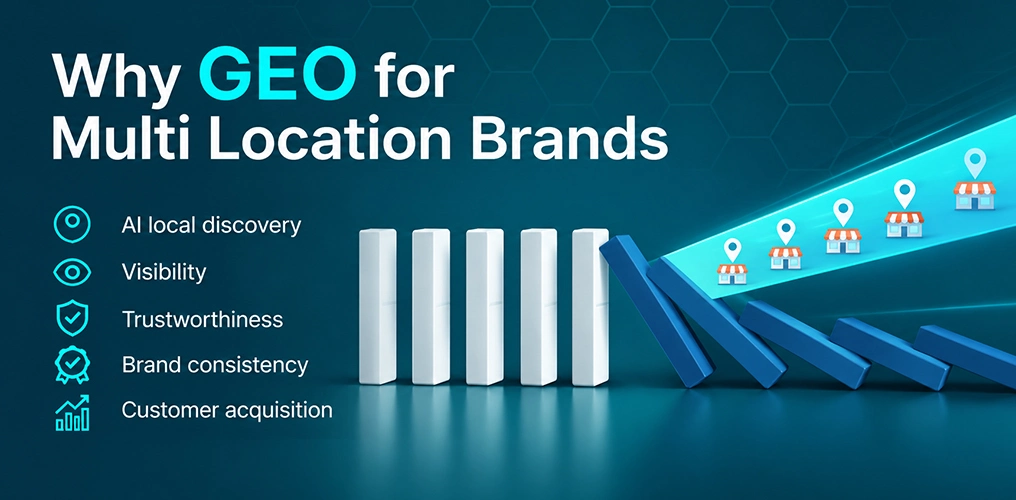
Brands that invest in GEO can improve:
AI-driven local discovery
Visibility in conversational search
Trustworthiness across digital ecosystems
Brand consistency across all locations
Customer acquisition through answer engines
Understanding the Core Pillars of GEO
Unlike traditional SEO, GEO relies on several interconnected factors that help AI systems understand and trust business information.
1. Structured and Accessible Information
AI systems need organized data to comprehend enterprises. Business names, addresses, phone numbers, hours of operation, services, categories, customer evaluations, etc. must be consistent and accurate on all platforms.The easier it is for material to be understood by computers, the more likely it is to be cited in AI-generated responses.
2. Semantic Relevance
The generative algorithms worry about meaning, as opposed to exact keyword matches. Companies need to provide Structured content that shows experience, relevance and local knowledge, not keyword stuffing.
3. Authority and Trust Signals
AI models frequently validate information by comparing multiple sources. Strong digital authority increases confidence in the information being presented.Reviews, citations, local directories, news mentions, and industry references all contribute to establishing trust.
Strategy 1: Increase Information Density with Local Context
There are still a lot of multi-location brands that have almost duplicate location pages with only little variations in city name or address. Well, this may have worked for basic SEO efforts in the past, but doesn’t add much value for AI-driven discovery.
Generative engines favor detailed, location-specific information that helps answer user questions directly.
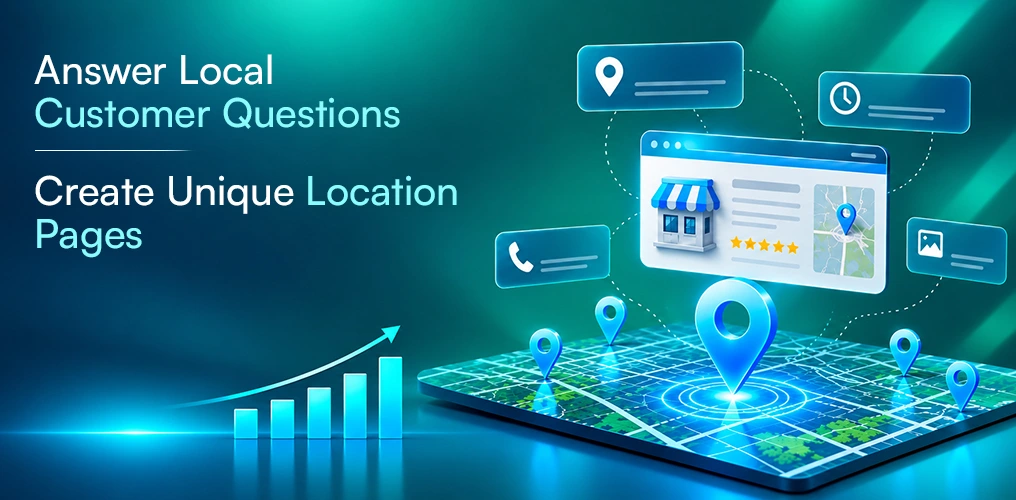
Create Unique Location Pages
Every location should provide information that reflects its local environment, services, and customer needs. Consider including questions such as:
Neighborhood information
Nearby landmarks
Area-specific services
Local FAQs
Parking details
Public transportation options
Location-specific promotions
AI powered location or store pages drive more leads and conversions for your business. Know more.
Answer Local Customer Questions
AI systems frequently pull information from content that directly addresses user intent. Consider including questions such as:
What services are available at this location?
What are the busiest hours?
Is parking available nearby?
Which neighborhoods does this location serve?
What makes this branch unique?
The more useful information available, the easier it becomes for answer engines to identify your business as a relevant solution.
Strategy 2: Build Authority Through Digital Citations
One of the most important GEO principles is consensus.Generative AI systems often verify information by comparing multiple sources before generating recommendations. If your location details appear consistently across trusted platforms, confidence in that information increases.
Maintain Citation Consistency
Business information should remain consistent across:
Business directories
Review platforms
Industry websites
Social media profiles
Mapping services
Local business listings
Accurate NAP (Name, Address, and Phone Number) data remains crucial, as inconsistencies can create doubt for AI systems.
Strengthen Third-Party Validation
AI engines place significant weight on independent validation. Businesses should actively build authority through:
Customer reviews
Local media mentions
Industry publications
Community partnerships
Local sponsorships
Business directory listings
These external references help reinforce trust and improve visibility in AI-generated responses.
Strategy 3: Optimize for Entity-Based Discovery
AI systems increasingly understand businesses as entities rather than collections of keywords. An entity includes everything associated with a business, including locations, services, reviews, categories, products, and reputation signals.
Multi-location brands should reinforce their entity presence, making sure all digital assets are tethered back to the same company identity. That includes consistent branding, accurate business information and full profiles on key platforms.
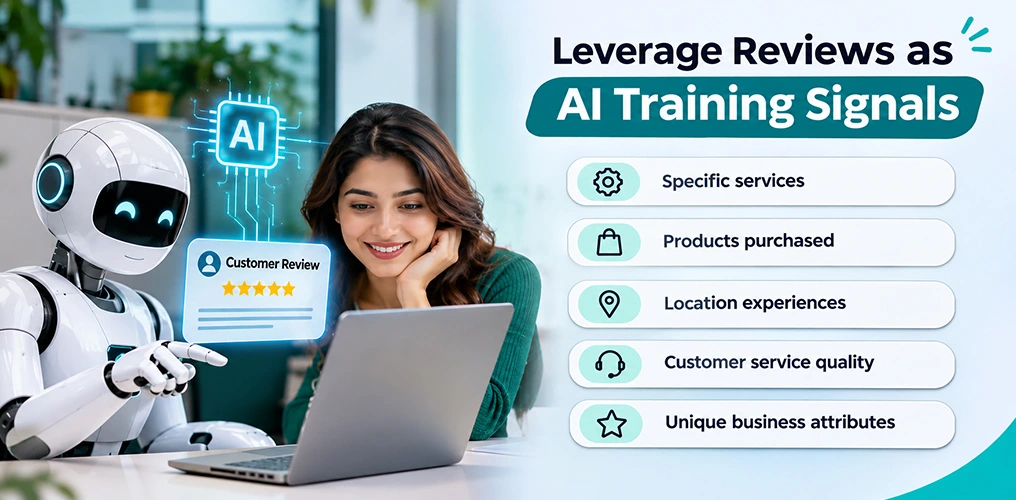
Strategy 4: Leverage Reviews as AI Training Signals
Reviews have always influenced local visibility, but they are becoming even more valuable in the era of GEO. Generative engines analyze review content to understand customer experiences, service quality, and business strengths. Businesses should encourage customers to leave detailed reviews that mention:
Specific services
Products purchased
Location experiences
Customer service quality
Unique business attributes
Rich review content provides additional context that AI systems can use when generating recommendations. AI based platforms are very useful to answer customer reviews promptly and appropriately. Many of them share sentiment analysis reports for businesses to understand the pain points of their customers and action on them accordingly.
Measuring Success in the GEO Era
Traditional SEO metrics such as rankings and clicks remain important, but GEO introduces new indicators of visibility. Businesses should monitor:
Brand mentions in AI-generated responses
Presence in conversational search experiences
Review quality and sentiment
Citation consistency
Local authority signals
Structured data accuracy
As answer engines continue to evolve, AI visibility will increasingly depend on how well businesses communicate information to both users and machines.
Final Thoughts
SEO is giving way to GEO. Traditional optimization isn’t going away. But corporations also need to go beyond that and widen their GEO strategy to how AI systems find, evaluate and disseminate information.
The future for Multi-location SEO and businesses will belong to organizations with strong local SEO foundations and structured data, rich local context, authoritative citations, and consistent digital identities.
As search becomes an AI-driven conversational experience, companies that present themselves as trusted sources of information will be best positioned to be included in the answers customers are provided. GEO is the foundation of visibility in the future of local discovery, not simply the next iteration of optimization.