Of all the factors that go into making high-quality content for a website, meta description is one of the most powerful, yet, often overlooked ones.
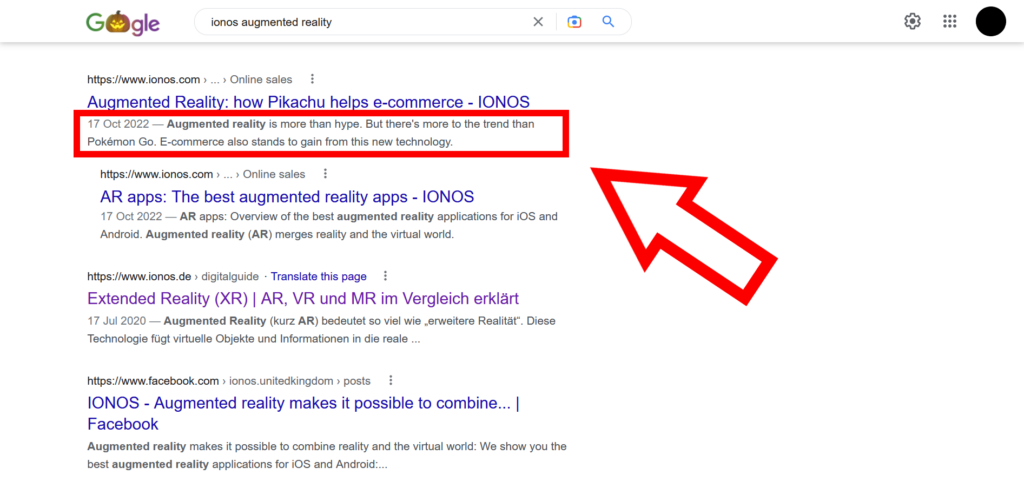
Search engine results show a brief meta description underneath the page title. It summarises the page’s information and introduces your website. Well-written meta descriptions or a meta description tag can convince people your page contains what they need.
If you want people to click on your website instead of all the others they can view, you need to make sure the meta description achieves all its critical purposes. What separates one meta title from another in terms of worth?
This article will show you how to write effective meta descriptions and common mistakes to avoid at the same time.
How to create an effective meta description?
Writing a meta description might pose a challenge for most individuals producing digital content. Here is a list of meta description tactics to help you.
Provide Conciseness and Precision
Meta descriptions should be short, crisp, precise, engaging and have clear language
Keep it simple and focused around the fundamental idea
Meta descriptions are concise; hence, term stuffing is unnecessary.
Excessive meta description length may adversely affect your website.
Monitor Character Count
Meta description character limit can be up to 300 characters, however 160 characters perform better as they help search engines track your offerings.
Analyze and Differentiate
In order to generate an effective meta description, it is better to go through your competitors’ meta descriptions.
Develop a description that captures significant, recurring elements seen in other meta descriptions, while avoiding mere replication.
Crafting a meta description that distinguishes your site from competitors’ enhances your website’s visibility in search results.
Display Significance
Assess your website’s relevance and objective while writing meta descriptions.
Effectively communicating the significance to potential customers will increase your website traffic.
Your meta description should reflect your website’s goals and your target audience’s goals.
Persuade Readers to Engage
The most effective meta descriptions are undeniably persuasive.
The main goal is to guide your target audience towards your products, services, or information.
Incorporate a Call to Action (CTA) — even basic phrases like “learn more” can effectively guide readers and boost your click-through rate (CTR).
If you want to improve your CTR and get seen in search, Vicinus helps you to do this by finding the high performing keywords through its keyword rank tracker. It also shares competitor rank tracking, and suggests content to make your brand more visible in relevant searches and get more hits.
Users and search engines understand your page better using target keyword SEO meta description.
Your major keyword should flow organically throughout the description.
Instead of overusing keywords, use them once or twice naturally.
This makes your page more relevant, consistent, and readable.
Prioritize User Intent
An effective meta description precisely corresponds with user search queries.
Prior to composing, inquire:
What problem is the user trying to resolve?
What information are they seeking?
Users click a meta description that matches their search.
Incorporate an Engaging Call to Action (CTA)
Make a clear and concise CTA.
Use phrases like “Learn more,” “Discover now,” “Get started,” or “Find out how”.
A sense of urgency or purpose motivates consumers to take action with CTAs
Emphasize Distinctive Value
Use your meta description to highlight what makes your page or business distinctive, such as free materials, expert analysis, exclusive discounts, and proven results.
This not only sets your material apart from that of your competitors, but it also makes people think that clicking on your link is worth more.
Use Active Voice
The active voice enhances intensity and precision in your description.
It is more compelling and comprehensible than passive construction.
For instance:
Passive: Our services assist customers in saving time.
Active: Use our expert services and save time!
Utilizing an active voice enhances the confidence, directness, and action-oriented nature of your message, making it ideal for attracting attention in crowded search results and feature in google rich snippets.
Methods for Evaluating and Quantifying Effectiveness
Crafting an efficient meta description constitutes only half of the task; understanding its performance is equally crucial. Assessing efficacy enables understanding of the factors that drive clicks and areas for improvement. Here is a method to evaluate and monitor your outcomes efficiently:
1. Click-Through Rate Evaluation
Your Click-Through Rate (CTR) is the greatest way to see how well your meta description works. One potential meaning of a high click-through rate is that it indicates that individuals find your excerpt appealing and believe it is relevant to the information they are seeking. Google Search Console shows how many times each page has been viewed, clicked on, and clicked through. Although it ranks well in search results, the page gets few clicks. This may indicate a boring meta description. You should use clear and short language, emotional triggers, and calls to action that are more powerful to get people more involved.
2. A/B Testing
A/B testing optimises high-traffic pages in real time to analyze and improve audience engagement. Try different meta descriptions over a set duration.
Evaluate click-through rate, bounce rate, and session duration to see if the version performs better. Minor modifications like changing text, employing effective terminology, or emphasizing value propositions can drastically impact user behavior.
3. Modify According to Performance Data
Fixing and updating your online listings is a never-ending process. Hence, it is essential to consistently evaluate your performance metrics and implement modifications as needed.
Should you observe an enhancement in CTR following a modification, implement analogous strategies on more pages. Go back to or change your description if performance suffers. This statistics-based technique keeps meta descriptions current with user preferences, search terms, and algorithm changes.
Common Errors to Avoid
Even the minutest of actions can result in substantial flaws, damaging the SEO efficacy. The following are the key risks to monitor:
1. Keyword Stuffing
Your meta description should use the proper keywords, but too many might make it sound robotic and phony. This appears spammy to search engines, hurting your seo credibility. Only use the main keyword once or twice organically. Write for humans before search engines. A good description flows effectively and tells search engines what your page is about.
2. Replicating Meta Descriptions
Every page on your website has a distinct function, and your meta descriptions must correspondingly represent that. Meta descriptions that are identical can confuse search engines and users. Duplicate descriptions fail to express each page’s distinct value, losing click opportunities. Always write page-specific meta descriptions that describe its content and purpose.
3. False And Unclear MD
A meta description highlights a commitment to the user. If it is unclear or over-promises the page’s offerings, visitors are bound to feel cheated, resulting in higher bounce rates.
For example, mentioning something unclear like “We give excellent services for all” conveys no clear information to readers. Utilize precise, action-oriented terms that appropriately represent the content they will encounter once clicking through. This builds trust and engagement.
4. Disregarding the Mobile Display
Even though mobile devices have smaller screens than desktop computers, millions of people use them to search and browse. When meta descriptions are too long, they are cut down, and important information or calls to action are left out where they should be. You should keep your descriptions between 150 and 160 characters long, and you should include any persuasive words or calls to action at the top of the summary.
Final Thoughts
Meta descriptions might be very small and short in nature, but they prove to have a major impact on the CTR of an organization’s website. It is also very important to understand what is a meta description in SEO and its role in driving local or relevant traffic to your website. It’s imperative for the person responsible for meta title and description to understand that Meta Description is a gateway towards ranking high in search results of respective search consoles. This whole procedure requires a lot of patience, analysis, and hit & trial to understand what works for you and your business the best! A good meta description can make a world of difference and needs to be given its due credit, wherever its due and worked on with full research and caution.
FAQs
1. What is a meta description and why is it important for SEO?
A meta description is a brief summary of a webpage that is displayed beneath the title in search results. Although it does not directly affect rankings, it significantly improves click-through rates, increasing user engagement with your page and indirectly enhancing SEO performance.
2. How long should a meta description be?
Preferably between 150 and 160 characters. This guarantees that the text adheres to Google’s display constraints and is fully visible, particularly on desktop devices.
3. Should I include keywords in my meta description?
Yes, integrate primary keywords organically. Google emphasizes matched terms in search results, enhancing the visibility of your snippet and aligning it more closely with the user’s search intent.
4. Can meta descriptions impact my Click-Through Rate (CTR)?
Absolutely. A well-crafted meta description acts like an ad copy for your page, clear, keyword-focused, and value-driven descriptions encourage more users to click.
5. How do I test if my meta descriptions are effective?
Track CTR in Google Search Console, conduct A/B testing on high-traffic sites, and enhance your descriptions depending on performance indicators like impressions, clicks, and ranking fluctuations.
6. What are common mistakes to avoid in meta descriptions?
Refrain from keyword stuffing, duplicating descriptions across pages, providing ambiguous summaries, making false assertions, and composing too lengthy descriptions that may be shortened, particularly on mobile devices.