Are Fake AI Reviews Killing the Credibility of Google Reviews?
Date : January 20, 2026
Share
Back in the day, reading reviews on Google was a fantastic way to get to know of a product or service before actually purchasing or hiring or using it. When people were looking for anything from the best burger restaurant to a reliable plumber, they depended on the star ratings and personal testimonials that were provided by other customers. Even as we speak, it is still the case. All the while, there are others who are attempting to alter reality.
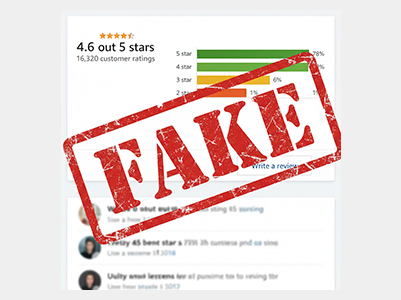
AI-generated reviews or fake reviews are spreading through Google like a virus. These ratings are quick enough to outpace the real ones and smart enough to sound human. Businesses can be propelled to greater heights or lowered to lower depths by anyone with a few keystrokes unleashing an army of false praise.
Having been around for a while in the local SEO industry, we are familiar with the telltale symptoms of review manipulation. Even though we are good at keeping an eye on company listings and reviews and taking measures to prevent fraudulent ones, we were shocked by the recently released information on fake reviews.
This isn’t merely a technical issue; it poses a serious threat to anyone who owns, markets, or relies on local companies. In this article, we’ll go over the definition of a fake review, how to recognize them, the harm they do, and the steps you can take to safeguard your company.
Types Of Fake Reviews
Companies who have to cope with the effects of phony reviews need to do a lot to defend the integrity of their online presence and keep their consumers’ faith. Here are some of the most common false reviews that can be found online right now:
1. False Positives
The purpose of these fraudulent reviews is to artificially inflate a company’s reputation by means of misleading client praise in order to achieve a higher ranking in local search results.
2. False Negatives
These are fake negative reviews aimed at hurting competitors by lowering their ratings and scaring off potential customers, digital sabotage for unfair advantage.
3. Self-Reviews
Business owners generate false profiles to generate favorable evaluations for themselves or unfavorable evaluations for their competitors, thereby distorting their online reputation in either direction.
4. Review Sellers
Vendors sell fake reviews, positive or negative, to businesses looking to manipulate their ratings, damaging the credibility of review platforms.
5. Retaliatory Reviews
Ex-employees or rejected candidates post fake reviews out of spite, often making exaggerated or harmful claims to hurt the business.
6. Exaggerated Complaints
In order to obtain refunds or incentives, certain customers falsify or fabricate the truth a bit, thereby transforming minor inconveniences into detrimental public complaints.
Special Note:
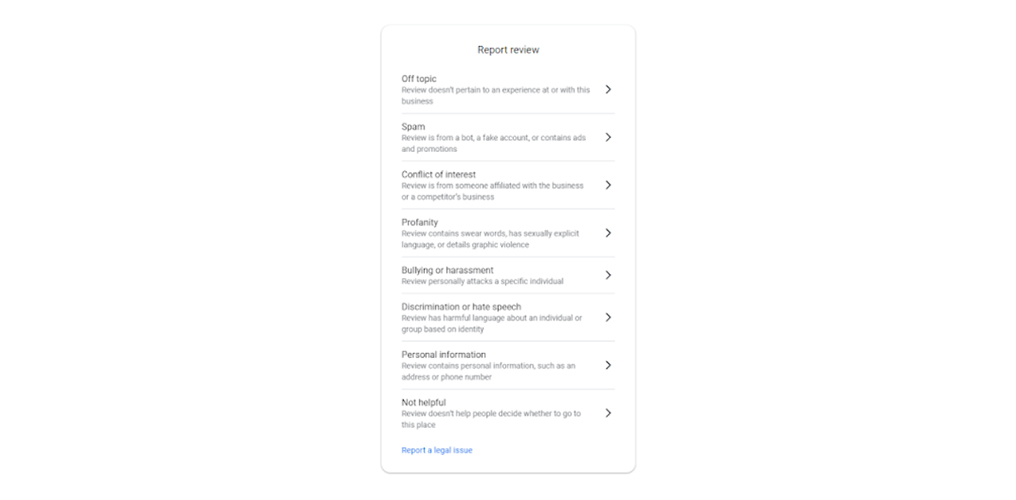
Listed below are the ten categories of evaluations that Google specifies can be flagged and eliminated:
Off-Topic
Spam
Conflict of Interest
Competitor-Generated Reviews
Profanity
Bullying or Harassment
Discrimination or Hate Speech
Personal Information
Incentivized Reviews
Reviews from Non-Customers
Special Note:
How to Identify a Fake Review
1. Listen to the tone of the review
Genuine reviews usually sound personal and a bit imperfect. If the wording feels too polished, starting with phrases like “I recently had the pleasure of working with…”, it might have been copied from a template or written to impress rather than share a real experience.
2. Sudden Spike In Ratings
A sudden flood of 5-star reviews within a short period is something unusual. Even when some are genuine, the abrupt jump can cast doubt on the overall credibility.
3. Monitor Photos Closely
Real customers often post casual, varied photos. If the pictures in reviews look identical to the company’s own promotional images, there’s a good chance they weren’t taken by the reviewer.
Consequences of Fake Reviews
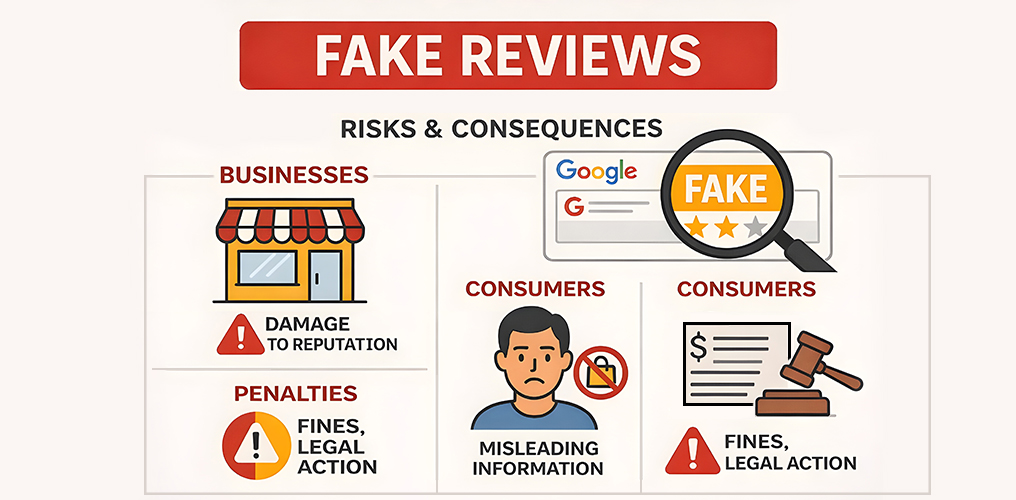
The effects of publishing false reviews are far-reaching and detrimental to companies, customers, and reviewers alike.
1. For Businesses
Reputation Damage
A company’s reputation and the number of consumers it attracts can be significantly impacted by a small number of false negative reviews.
Loss of Funds
The potential for misleading evaluations to discourage prospective buyers can have a negative impact on revenue generation.
Legal Risks
Fines, penalties, or legal action may be imposed on companies that are discovered to have posted fraudulent reviews for violating consumer protection laws.
Platform Sanctions
Review sites with stringent anti-fraud standards, such as Google, Yelp, and Amazon, may face platform sanctions such as:
1. Lower search rankings
2. Listing removal
3. Advertising restrictionsc
4. Permanent bans for repeat offenders
Special Note:Of all the platforms, Yelp is one of the strictest platforms. Penalties for review fraud can include immediate ranking drops and total deplatforming. Review spam, such as large spikes or overused wording, can still result in ranking penalties, even though Google and Facebook are becoming less tough.
2. For Consumers
Poor Purchase Decisions
Consumers can make wrong product choices because of false reviews, causing customer disappointment and waste of their capital.
Erosion of Trust And Credibility
When determining local rankings, Google evaluates the quality, quantity, and responsiveness of reviews.
A recent study found that 39% of consumers trust online reviews less than they did five years ago, a clear signal that fake reviews are undermining the system.
3. For Individuals
Posting false reviews has the potential to backfire, resulting in harm to one’s credibility and long-term digital ramifications. Users who submit false or indulge in paid reviews may be subjected to:
1. Review removal
2. Account suspension
3. Permanent bans
4. Reputation Loss
How to Remove Fake Reviews
Fake reviews can damage your brand’s reputation, confuse prospective customers, and undermine trust, particularly on sites such as Google, Facebook, or Yelp. Frequently shared by bots, rivals, or individuals making false assertions, these reviews can influence public perception if not adequately addressed. Fortunately, each platform provides methods to report and eliminate them. Here is the method to address them on Google, Facebook, and Yelp.
Google Reviews
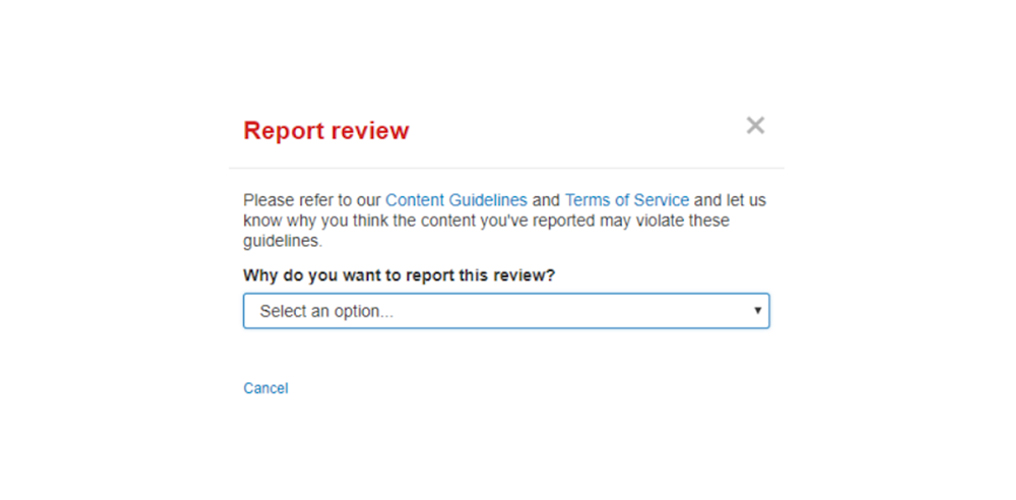
1. Navigate to the Reviews section of your Google Business Profile.
2. Locate the suspicious review, select "More," and then "Report review."
3. Tap the user's name, select "More," and then select "Report profile."
4. You can also use email or chat help to give more information, to further analyze the issue during the reporting process.
Facebook Reviews
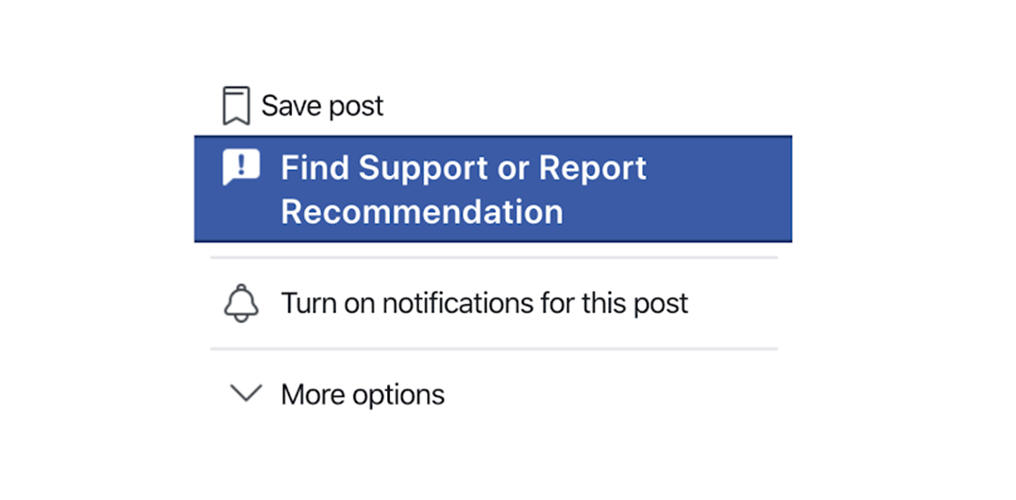
1. Locate the review and select both "Find support" or "Report recommendation."
2. Select a rationale from a list of alternatives (there is no remark field).
3. Post a factual, composed public response; refrain from using emotive language, as discussions may become more heated on Facebook.
Reviews on Yelp
1. Log in, locate the review, and select "Report."
2. Select an explanation and provide context in the remark section (e.g., inaccurate information, non-customer, incorrect images).
3. Yelp is generally more efficient in its review removal process and permits for detailed explanations.
4. While waiting, respond publicly to mitigate the extent of the damage.
How Vicinus Helps to monitor Fake AI Reviews
The credibility and trustworthiness of your business can take a hit from fraudulent reviews, whether they are overly positive spam or unfair remarks. A prejudiced tone, suspicious reviewer profiles, or unclear wording are all red flags, although they aren’t always easy to detect without the help of AI review detection. You must respond properly, providing clear facts and a contact email to demonstrate transparency and care.
Beyond simply facilitating review responses, Vicinus also aids in identifying fraudulent reviews, allowing you to protect your reputation from potential damage. Vicinus uses machine learning and artificial intelligence to spot suspect behavior in reviews across platforms, such as when the same IP address is used to post repeated negative reviews or when reviewers target different retail locations. This proactive spam detection helps protect your brand from coordinated attacks and fake feedback. Additionally, Vicinus is powered with an automated response system to guarantee consistent messaging, and a centralized dashboard and sentiment analysis to monitor reviews for actionable insights.
Conclusion
Your brand’s credibility, customer trust and credibility as well as local SEO can all take a hit from fake reviews, regardless of how positive or negative they are. The more plausible they seem, the more elusive they become. Consider how red flags such as unclear wording, aggressive or enthusiastic tones, and dubious accounts might be.
Once you find one, you can mark it for removal using the platform’s capabilities. Just make sure to keep track of any evidence you find. Providing a channel for contact between businesses and their customers while simultaneously identifying, acknowledging, and correcting inaccurate evaluations is essential for maintaining a professional attitude. In addition to protecting your reputation, this shows prospective clients that you are open to their suggestions and are willing to have a serious conversation with them.