Is Inconsistent Information Hurting Your Brand’s Online Presence?
Date : February 27, 2026
Share
In the current day and age, most people use search engines, social media platforms, and maps to avail services or items as quickly as possible. However, achieving optimal availability information pertaining to products and services presents a formidable challenge. When a business has multiple listings with differing phone numbers, addresses, or other details, it can create confusion for customers.
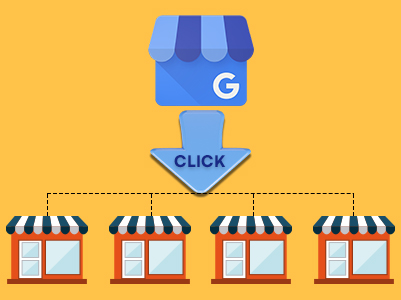
Inconsistent information can be difficult and misleading for customers to interpret – for example when a business’s phone numbers, addresses, or operating hours are listed differently across platforms such as your multiple Google Business listings, other online directories, and your website or landing pages. This uncertainty frustrates potential customers, keeps them from looking for the services you offer, and stops them from taking action towards availing your services. Google uses precise data to select local search results for businesses.
This article discusses the most prevalent causes of inconsistent information, how it affects customer trust and search discoverability, and how to keep your brand accurate, trustworthy, and easy to locate online.
Understanding Inconsistent Information
You get inconsistent data when different web platforms have different company details. Brands need accurate, current information to develop a solid digital presence. The same business posted under different names, addresses, phone numbers, or other information might confuse search engines and customers.
Examples of inconsistent information that are frequently encountered include:
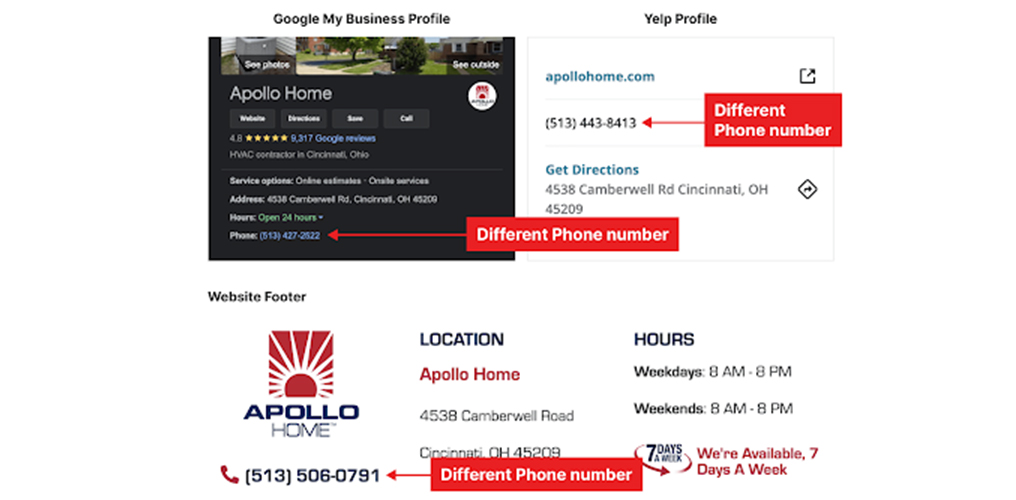
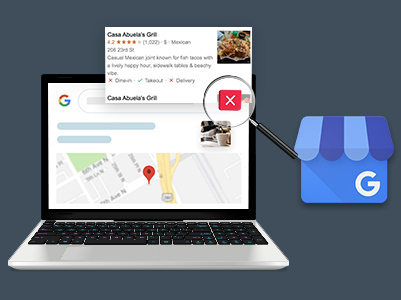
Different sources have different phone numbers of the business. The phone number stated on the GBP, Yelp and the company website are all different. Due to the different phone numbers, customers get confusing and misleading information.
2. Another example can be that of one directory listing the store’s hours as 8 AM to 8 PM, while another listing it as 9 AM to 7 PM. misleading information.
3. Outdated or incorrect product information is listed for discontinued services or goods.
Various factors contribute to the inconsistency of information available online:
1. Numerous listings generated across platforms without adequate oversight.
2. Obsolete content that has not been updated following alterations in your business operations..
3. Human mistake in data entry, particularly during manual updates..
4. Third-party websites or aggregators extracting information from untrustworthy sources.
The Hidden Dangers of Inconsistent Business Information
Even little mistakes in your business information might have big impacts. Inconsistent information can hurt your brand’s legitimacy and growth without you even knowing it, from search engine visibility to customer confidence. These problems affect how you look online in the following ways:
Google and other corporations utilize precise information to put local businesses in search results in order of importance. Search engines may see differences as a sign of dependability due inconsistent NAP, which lowers ranks in search rankings.
Consequences:
1. Diminished local search visibility
2. Reduced brand trust indicators for Google's algorithms
3. Reduced likelihood of ranking in the premier search results
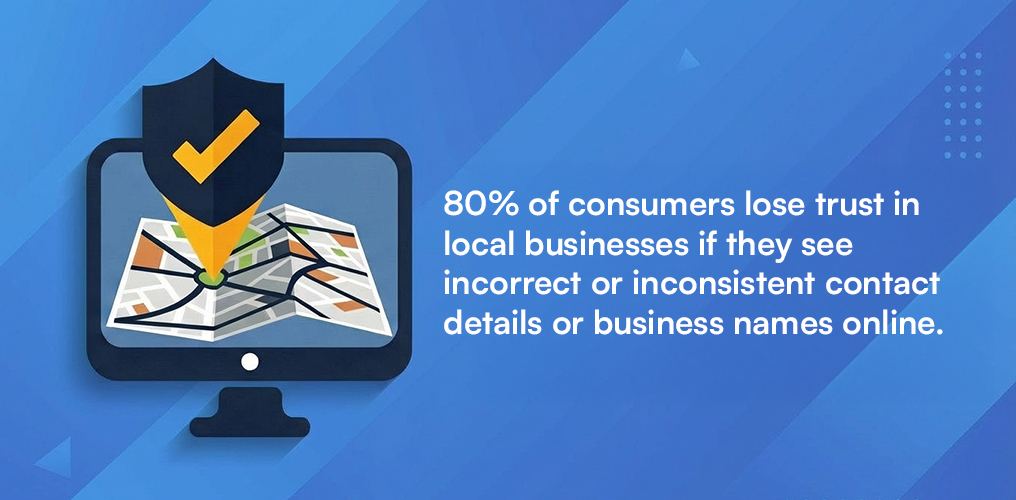
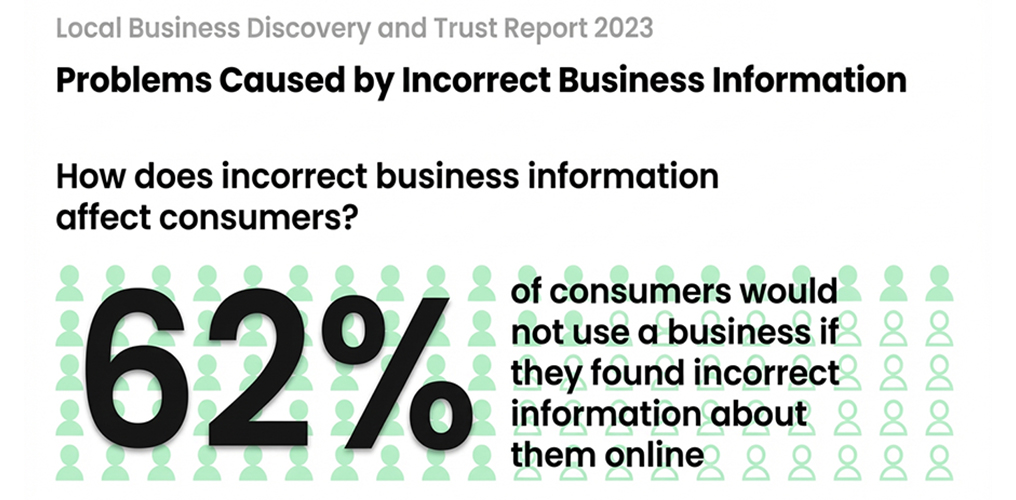
4. BrightLocal indicates that 68% of consumers lose confidence when business information is inaccurate.
Misleading Your Customers
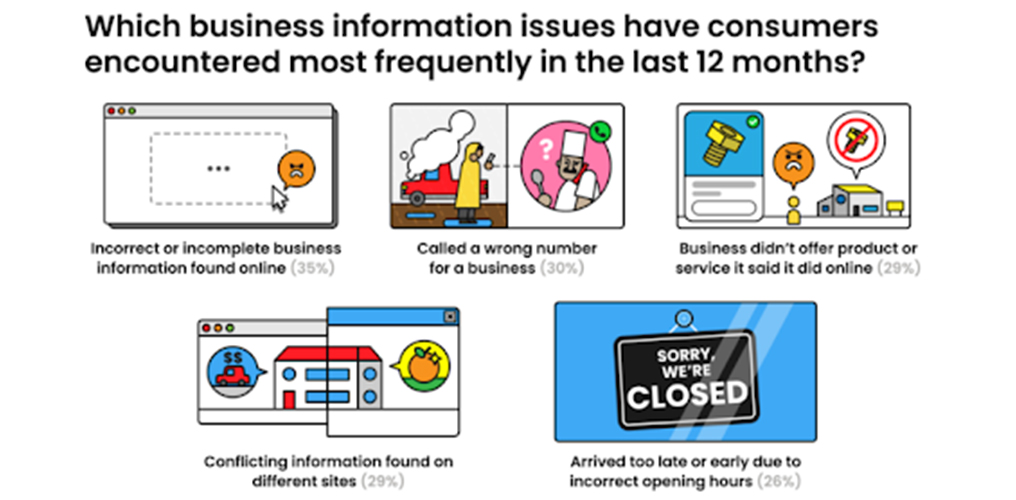
Inconsistent information makes it harder for customers to trust. This ambiguity can repel potential customers before they contact or visit your business.
Consequences:
1. Customer ambivalence and skepticism
2. Elevated bounce rates as consumers exit your listing or website
3. Overlooked chances to transform prospects into devoted clients
Inconsistent information drives clients to competitors that provide clearer and more dependable details, regardless of the superiority of your products or services. A consumer attempting to place an order with “Ken’s Bakery” terminates the transaction upon discovering an invalid phone number.
Consequences:
1. Misplaced orders or questions
2. Overlooked revenue prospects
3. Competitive inferiority
Detriment to Brand Reputation
Misinformation about your organization may lead to customer discontent and negative reviews, lowering your brand’s trust.
Consequences:
1. Escalated adverse evaluations and consumer grievances.
2. Degradation of consumer confidence.
3. Increased time and effort required to address and rectify misinformation.
4. Prolonged harm to brand reputation and consumer loyalty.
How to Detect Errors in Your Listings?
First, identify the issues before updating inaccurate corporate information. Early detection of these issues on several platforms protects your brand’s reputation and avoids customer confusion. Whether done manually or automatically, the correct tools, audits, and methodologies can speed up and optimize this process.
Here is a way to find conflicting information that works well:
Use tools and tests to find mistakes
Vicinus and other listing management software automatically look at your profiles to find errors or missing information. These checks find inconsistencies in your name, address, phone number, hours of operation, descriptions, and pictures, so you can fix them before they cause any problems.
Checking by hand vs. using automated solutions
Manual reviews can discover issues, but they take time and are easy to miss, especially for large companies. Automated systems like Vicinus have automation and checks built in which monitor and fix inaccuracies on an ongoing basis.
Most of the time, mistakes happen when information is updated or copied from more than one source. Some of the most common platforms are:
Google Business Profile is a main source for local questions and customer interactions.
Yelp is a site where user reviews make the effects of wrong information worse.
Facebook, Instagram, and other social media sites where profiles may not always be up to date.
Online Directories: These are collections of old or broken links to other sites.
Best Practices for Managing Consistent Business Listings
1. Perform Thorough Audits
Examine all your internet listings to detect discrepancies. A comprehensive audit identifies deficiencies and guarantees the utilization of precise data. Concentrate on:
NAP information (Name, Address, Phone Number)
Descriptions of products and services
Visual elements including logos and photographs
2. Assert and Authenticate Your Listings
Claiming and authenticating your profiles on networks such as Google Business Profile and Yelp grants you authority over the displayed information. Validation:
Verifies your legitimate ownership
Establishes credibility with search engines and consumers
Enables the management and modification of details with authority.
3. Establish Centralized Data Management
Manual management of listings heightens the likelihood of errors. This methodology guarantees uniformity and facilitates updating. Utilize instruments such as:
CRM solutions for the storage and management of information
Platforms for managing listings to synchronize data between directories
Cloud databases as a singular source of veracity
4. Consistent Surveillance and Revisions
Ensuring precision necessitates continuous vigilance. Establish procedures to:
How Vicinus Helps Prevent Erroneous Listings and Manage Information
Utilize automated notifications for inconsistencies.
Conduct regular manual evaluations.
Revise details promptly upon any alterations.
How Vicinus Helps Prevent Erroneous Listings and Manage Information
Websites can display misleading or inconsistent business information, confusing customers and damaging your brand. Dealing with many platforms is time-consuming and error-prone. Vicinus offers a tool that helps to prevent the dissemination of erroneous or misleading information and enhances the security of your business details. Vicinus assists you in maintaining responsibility by centralizing data and providing real-time monitoring.
Here’s how Vicinus helps businesses prevent errors and manage their information efficiently:
Continuous Monitoring to Spot Inconsistencies: Vicinus continuously monitors your listings for supposed inaccuracies like wrong addresses, incorrect phone numbers, or mismatch descriptions. It also issues alerts to help you rectify these errors before it impacts customers and their decisions.
AI-Powered Photo Editor: The Ai Photo Checker function is designed to find irrelevant photos in your listings and replace them with suitable, authentic images.
Centralized Database for Easy Updates: Through the use of a unified interface for storing and updating data, Vicinus guarantees more efficient information management by doing away with discrepancies caused by manual updates across several platforms.
Finding and Claiming Unverified Listings: The Listing Finder looks through directories for entries that aren’t claimed or monitored, which could spread false information. You can then claim these listings and make sure that all of the information is proper for your business.
Bulk Editing for Consistent Updates: Vicinus’ Bulk Editor lets you modify multiple listings at once, reducing errors and ensuring consistency.
Locking Listings to Prevent Unauthorized Changes: The Lock Listings feature makes sure that only persons who are allowed to, can modify information. This protects your listings from accidental or malicious alterations and maintains the information correct.
Final Thoughts
The consistency of your business’s information can affect branding, reputation, sales and search engine rankings. Inconsistent information impacts a brand’s sales and image by presenting misleading information. Additionally, search engines punish firms with erroneous or incomplete listings by reducing their online exposure.
In order to establish credibility and enhance visibility, it is imperative to have correct information across all platforms. Proactive listing management should be an important part of the marketing strategy of a business and the choice of the right tool/s can transform each listing into a reliable nexus for its clientele.